Welcome to Arrow Seed

WrappedPkup
WildlifeFoodPlotSliderFrton
BuffalograssSliderFront
SmallGrainSliderFront
SumAnnSliderFront
TurfgrassSliderFront
WildlifeHabitatSliderFront
PastureGrassSliderFront
WheatSliderFront
CoverCropSliderFront
AlfalfaSliderFront
SunSetBluestemSliderFront
P1010046
WrappedPkup WildlifeFoodPlotSliderFrton BuffalograssSliderFront SmallGrainSliderFront SumAnnSliderFront TurfgrassSliderFront WildlifeHabitatSliderFront PastureGrassSliderFront WheatSliderFront CoverCropSliderFront AlfalfaSliderFront SunSetBluestemSliderFront P1010046

Our future depends on your success!

Arrow Seed believes agricultural producers deserve only the  best available genetics in our seed products.  The same belief  is criteria for selection of related product lines. We adhere to stringent standards in selecting and presenting products to our customers.

Browse our web site, or give us a call to assist you in choosing the seed varieties best suited to your needs.

Call us at (800) 622-4727

Delay Planting Summer Annuals Until Warmer Temperatures are the Norm

Forage producers who just planted their corn and soybeans may be eager and rush to plant their summer annual forage grasses next. With these grasses, too early is too bad.

Summer annual forage crops — like sudangrass, millets, cane, teff, and sorghum-sudan hybrids — are hot weather crops. Not only do they grow best in hot weather, they can be injured or even permanently stunted by cool weather.

Always wait to plant any summer annual forage grasses until soil temperature is permanently above 60°F and 65°F to 70°F for the millets and teff. This means planting in late May at the earliest, or early June in many cases.

These plants also need for air temperature to remain warm, even at night. If either soil or air temperature gets too cold, some summer annual grasses can be stunted permanently, no matter how nice the growing conditions are later on.

True sudangrass might tolerate cool temperatures best of all the summer grasses. I don’t know the exact limits, but if soil stays above 55°F and air temperature doesn’t drop below 40°F, sudangrass eventually will recover from the cold stress. On the other hand, millets and some forage sorghums may never snap out of the stress caused by a 45°F, or even a 50°F night.

Even if they don’t get stunted, the few days you gain for earlier grazing is pretty small compared to the risk of losing much of their growth potential.

Bruce Anderson
Extension Forage Specialist

Click HERE to check daily Soil Temperatures

VISIT US  at one of these summer events:

Sandhills Ranch Expo- June 13 & 14th Bassett, NE

NE Grazing Conference- August 14 & 15 Kearney, NE

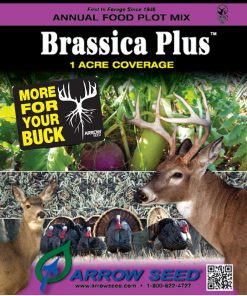
FREE SHIPPING on select wildlife Food Plot Seed!

Do you have a CRP or other seeding contract? We have the native grasses and forbes to fill that contract.  Send us a copy of your seeding sheet for a FREE quote.